 Television
 Radio
Radio Newspaper
Tất cả chuyên mục

 Hotline: (0215) 3835300


ĐBP - In recent years, aligned with digital transformation policies and the orientation toward a low-altitude economic development model, Điện Biên province has proactively applied information technology in forest management, protection, and fire prevention during the dry season.
The application of technology ranging from digital maps and satellite imagery to flycams and specialized software has facilitated early detection and rapid handling of forest encroachment risks.
.jpg)
In Hua Rốm village, Nà Tấu commune, residents now utilize a new tool consisting of smartphones and community Zalo groups for forest management and protection, complementing their traditional experience and direct observation. Along with technology, Hua Rốm villagers have established forest management conventions where households must carefully clear vegetation and avoid burning near forest areas during the clearing season. All activities must be reported to the village head beforehand and are strictly regulated to occur between 17:00 and 19:00, a timeframe with minimal wind that limits fire spread risks.
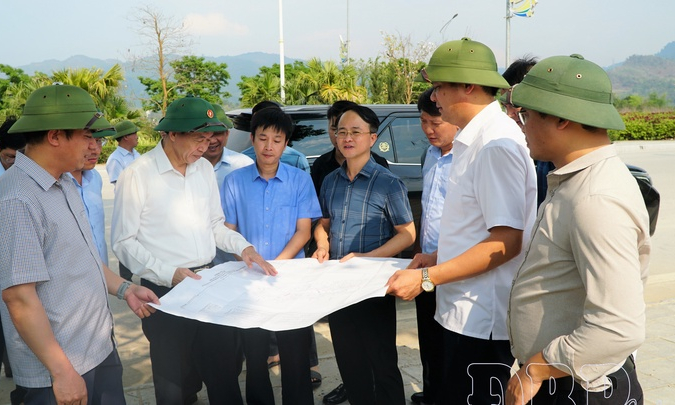
Vàng A Sình, Secretary of the Hua Rốm village Party Cell, stated that the village currently manages 2,996 hectares of forest through 16 protection teams, each consisting of 8 to 9 people who perform regular weekly patrols. The village has formed a Zalo group for team leaders to share information and disseminate it to members. Furthermore, through digital maps provided by communal forest rangers on smartphones, the village management board can monitor forest status, owners, and types, which streamlines tracking and protection efforts.
.jpg)
Benefiting directly from the forest, Hua Rốm residents have become increasingly committed to protection efforts. On average, the villagers receive between VND 700 million and VND 800 million annually from forest environmental service payments. A portion of this funding is allocated to a common fund to support patrols while the remainder is distributed equally among households. In 2024 specifically, 141 households in the village were shared nearly VND 3 million each. Although the amount is not large, it clearly demonstrates the benefits of the forest to the people. When the forest provides a livelihood, its preservation becomes a self-motivated necessity rather than an imposed task.
Regarding digital transformation in forest management, Điện Biên province has invested in specialized machinery and software while accelerating the digitization of forest and forestry land records. To date, the entire area of forest and forestry land in the province has been digitized and managed on a specialized system with continuously updated data that allows for historical tracking of each forest area to serve inspection and violation handling effectively.
.jpg)
As Điện Biên enters the dry season, the risk of forest fires remains high, sometimes reaching extremely dangerous levels. Early detection and warning have become key factors in management, as statistics from the start of the 2025 - 2026 dry season show that fire warning systems and satellite imagery detected 873 fire points, including approximately 400 suspected forest fire spots. Thanks to timely verification and handling, these fires were controlled early, mostly affecting only the undergrowth. Approximately 80% of forest law violations are now detected through satellite imagery and warning software.
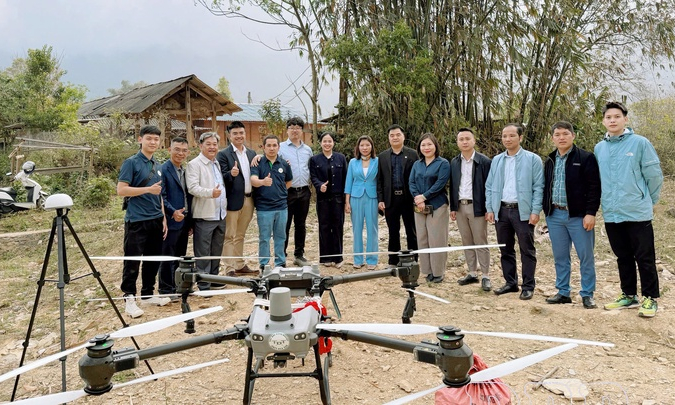
Nguyễn Mạnh Toàn, Deputy Director of the provincial Forest Protection Division, noted that forest protection forces now utilize digital maps, satellite imagery, flycams, and forest change monitoring software to detect forest loss and suspicious fire points early. This approach enables accurate and efficient handling of violations while saving significant time.
.jpg)
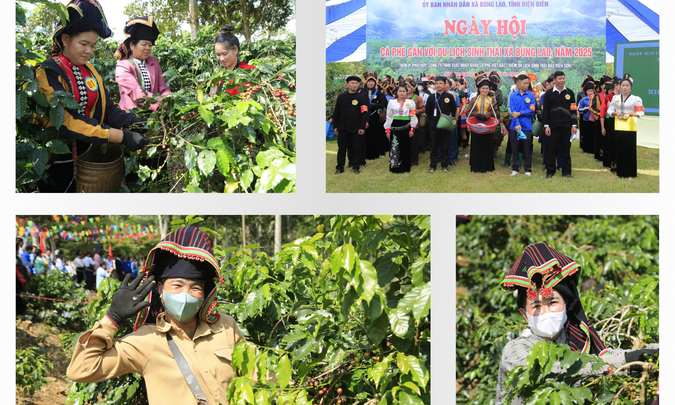
One of the province’s recent policies is linking forest management with economic development, focusing on the low-altitude spatial economic model. This model aims to maximize the space under the forest canopy and on sloping lands to create high added value. According to plans for 2026, the province will plant 5,930 hectares of coffee intercropped with macadamia and 6,070 hectares of macadamia. Total registrations for coffee planting have reached over 14,384 hectares, representing 142.6% of the plan, alongside over 3,000 hectares of macadamia.
These results reflect high consensus among the people. The implementation is tied to the “Điện Biên Phủ in Peacetime” campaign aimed at restructuring the agricultural sector and piloting the low-altitude economic model. With provincial funding and technical support, residents play the central role in gradually transforming bare land and hills into sustainable green economic zones. Alongside forest protection, new production areas and economic models like the low-altitude economy are taking shape, ensuring that forests are preserved while improving livelihoods and developing a green economy in line with the goals of the 15th Điện Biên provincial Party Congress Resolution for the 2025 - 2030 term.

 Chia sẻ
.jpg)

.jpg)
.jpg)
.jpg)